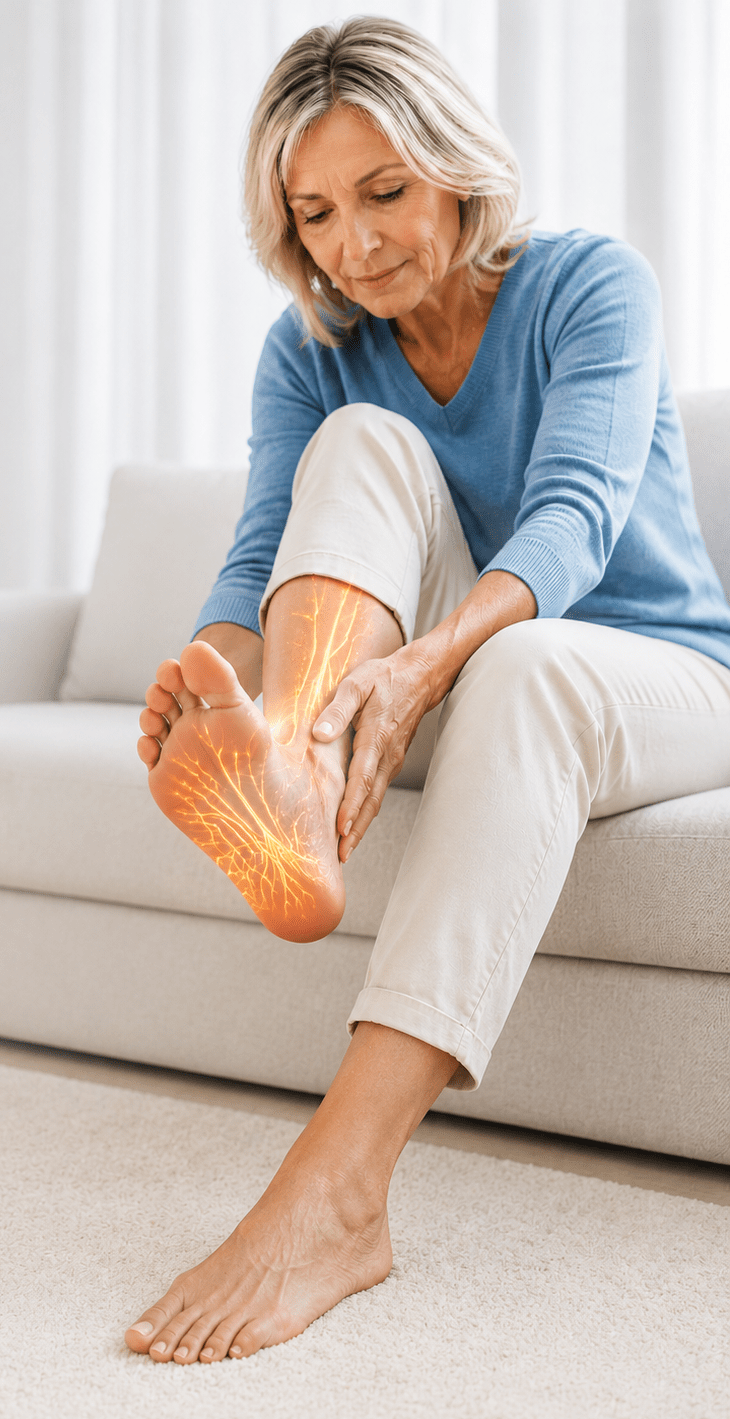
Understanding the Underlying Cause of Diabetic Neuropathy
Here are some revolutionary concepts for both type I and type II diabetic neuropathy. Let’s start with type II. It is a well-known fact that type II diabetics tend to eat an excessive amount of sugar. What tends to get overlooked is the fact that when you increase the sugar in your diet, something else in your diet decreases. Typically, protein is one of the things that gets decreased. This leads to a protein deficiency. A symptom of a protein deficiency is slow wound healing. This means that when nerves are damaged, the body lacks the protein needed to heal them. As a result, the nerves continue to get worse and worse until symptoms begin to appear.
A protein deficiency is often the cause of diabetic neuropathy for type I diabetes as well. The type I diabetic is often so concerned with monitoring their sugar intake that they don’t give adequate attention to monitoring their highly complete protein intake.
Diabetic Neuropathy: The Symptoms
The symptoms of diabetic neuropathy can start slowly as tingling and numbness in the hands and feet. When this occurs, ask yourself about both your sugar and your protein intake. 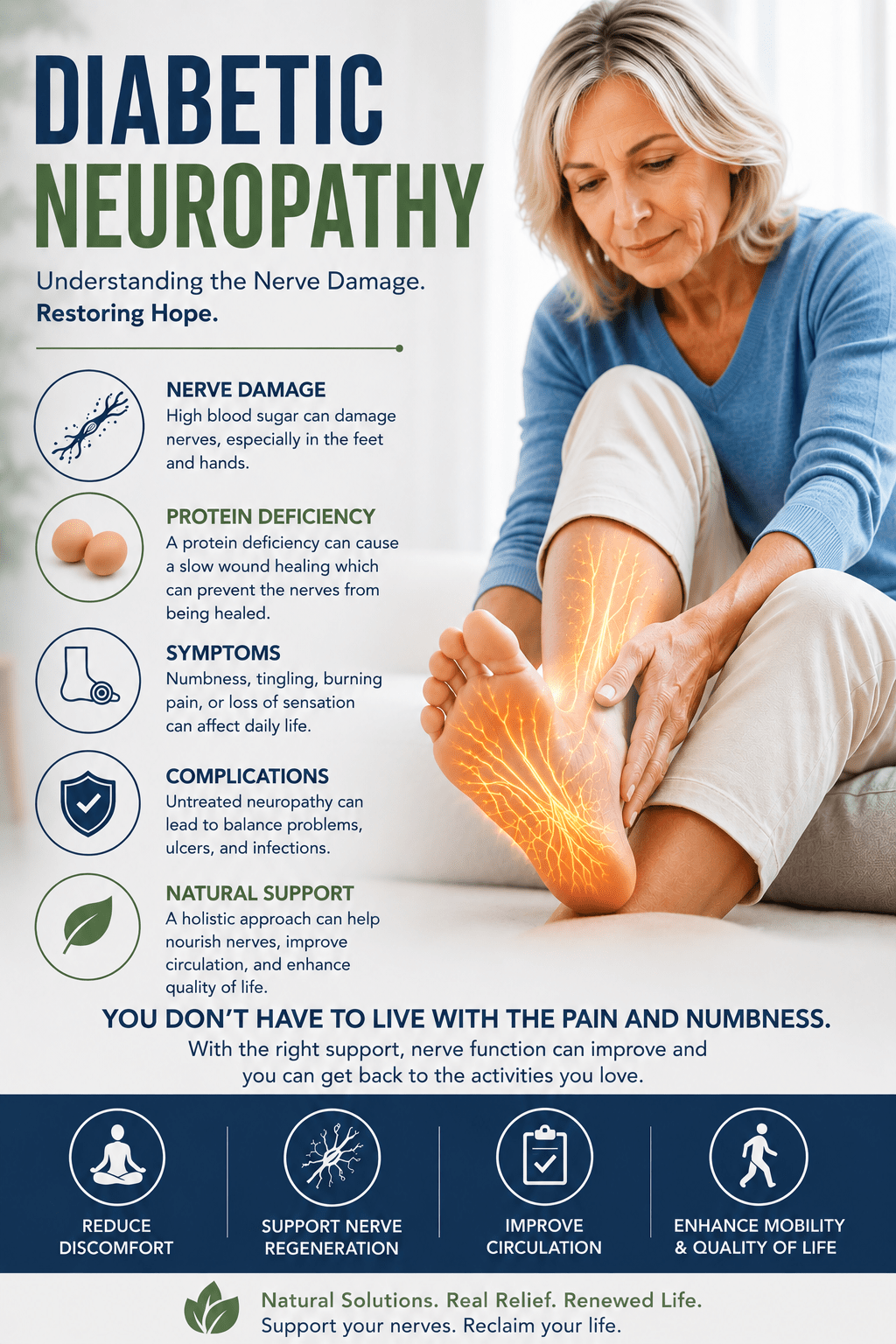 Yes, your sugar intake may need to be decreased. But just as importantly, ensuring sufficient highly complete protein at this early stage can help your nerves heal, preventing progression to more serious symptoms.
If your symptoms have already progressed to burning, sharp-shooting pain, extreme sensitivity to touch, or numbness, then your nerves may already be severely damaged. In these cases of diabetic neuropathy, a physician should be consulted immediately. Along with seeing a physician, try getting your sugar consumption under control and increasing your highly complete protein consumption. The highly complete proteins can be used by your body to heal the nerves. At Optimum Health, we have had type I diabetic clients who have felt nothing for over a decade be able to feel a piece of cotton rubbed across their hands and feet after just a few months of consuming sufficient amounts of highly complete protein! We have had individuals who had already had a toe amputated and were about to get more amputations come for assistance. In as little as three weeks, everything is healed, and all amputations are canceled. Doesn’t this make you want to give what is presented here serious consideration?
Diabetic Neuropathy: Balancing Nutrients
At Optimum Health, in dealing with diabetic neuropathy, we asked the question, “What has happened to sugar to make it so harmful?” It took us a few decades to figure this one out! What we finally noticed is that all foods that are high in sugar are also high in fiber. As it turns out, the fiber holds onto the sugar, causing it to be released slowly over a few hours. We have removed the sugar from fruits and call it orange, grape, or apple juice. We remove the fiber from the sugar cane plant, dehydrate the juice, and offer the resulting powder as table sugar. We remove the fibrous part of plants before making bread and pasta. As a result, we consume sugar without fiber, causing it to rush into our bloodstream within minutes and spike our glucose levels! How do we prevent this whole process?
 All we need to do is add the fiber back into the diet. There are several ways to do this. Obviously, the best way is to eat the fruits and plants without removing the fiber. Unfortunately, that is just too hard for many people. The next best thing is to add fiber back into the diet just before consuming fiber-free foods and drinks. This means having the fiber in a paste in your stomach, ready to grab hold of the sugar as it enters. At Optimum Health, we have had individuals come for help whose A1C was 12 and higher, claiming that they just couldn’t stay off the sugar. We put them on a strict fiber routine that is easy to follow and allow them to continue consuming their typical diet. In just three to four months, their A1C will drop below 6.0!
Dropping the A1C helps tremendously with diabetic neuropathy, as you can stop damaging the nerves. But we also have to heal the damaged nerves. Again, to do this, we increase consumption of highly complete protein. This is best done with eggs and/or beans with ground sesame seeds or a little bit of pork added to the beans. In some cases, digestive enzymes are needed to help the person fully break down the protein. Now, the amino acids in the protein can be used to heal the nerves in the hands and feet. The truly good news is that the amino acids will be used to fix many problems that the person may be experiencing.
Does dealing with all of this seem overwhelming to you? Would you like to know more? At Optimum Health, we are here to help. Call for your free 15-minute consultation.

Diabetic Neuropathy: Related Topics
Optimum Health’s Concept of Healing
Primary Wellness Consultations
Donations: Help Us Help Others
Email Us: How Can We Assist You?
Our highly trained professionals are committed to your health journey. We provide individualized support and education to enhance your understanding of what it means to be healthy and the steps you can take to improve your health. Access to quality care is essential for everyone, and we are here to help you navigate your journey to better health.
 Start your path to optimum health by scheduling your appointment today. Member: Certified Natural Health Professionals