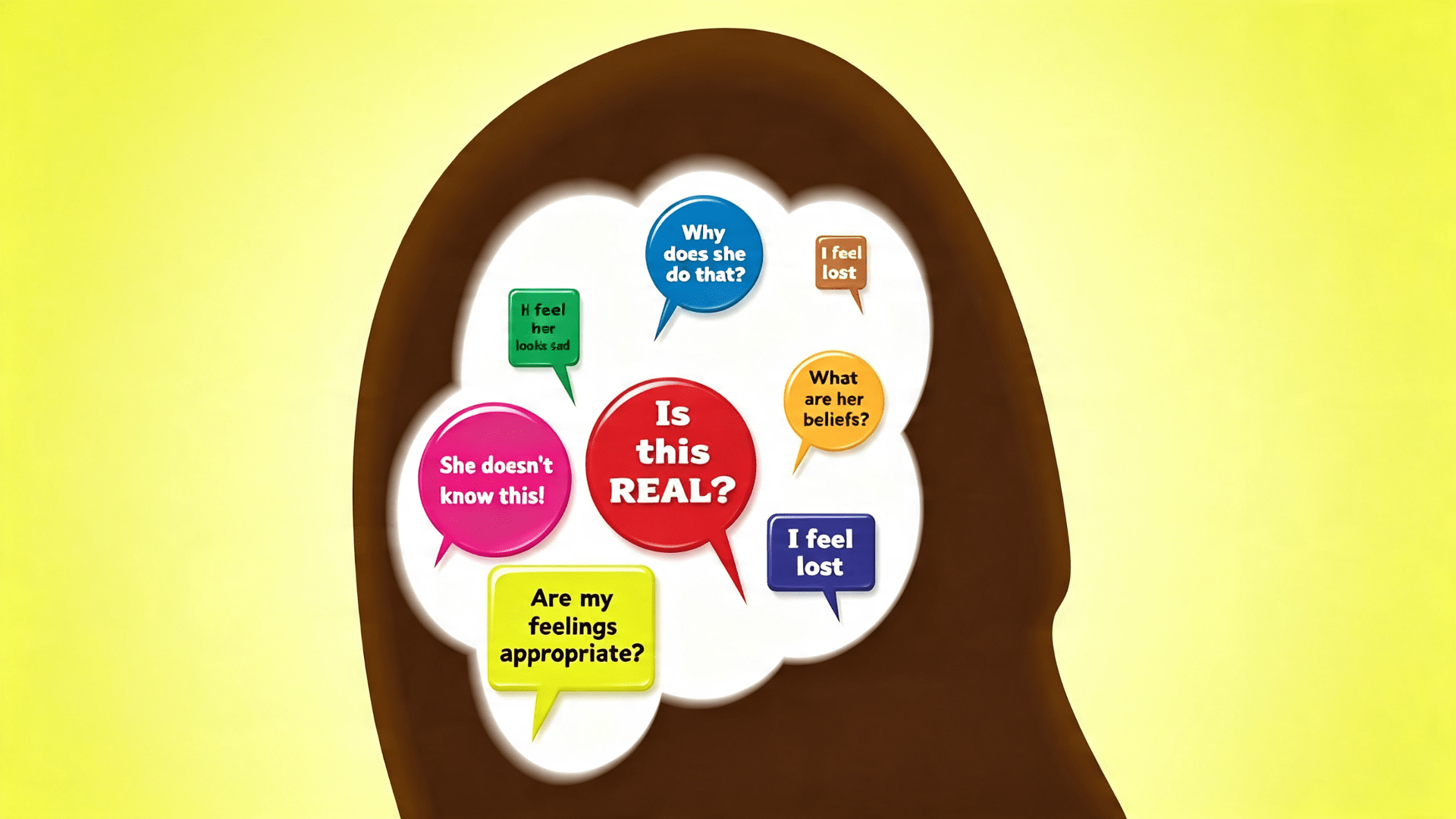
Theory of Mind
Theory of Mind is the concept that each person has their own mind with their own understanding, set of ideas, and beliefs. This is what makes us individuals with our own unique view of reality. Though Theory of Mind development occurs on an individual basis, developing it typically involves:
Age 3: Understanding that others think and know things that are different from what you think and know.
Age 2: Understanding the difference between thoughts and reality, and ascribing wants to others.
Age 4: Understanding that thoughts may be different from reality.
According to Theory of Mind, before age 4, a child feels no need to communicate many things he knows and experiences because he assumes that everyone already knows everything he thinks and feels.
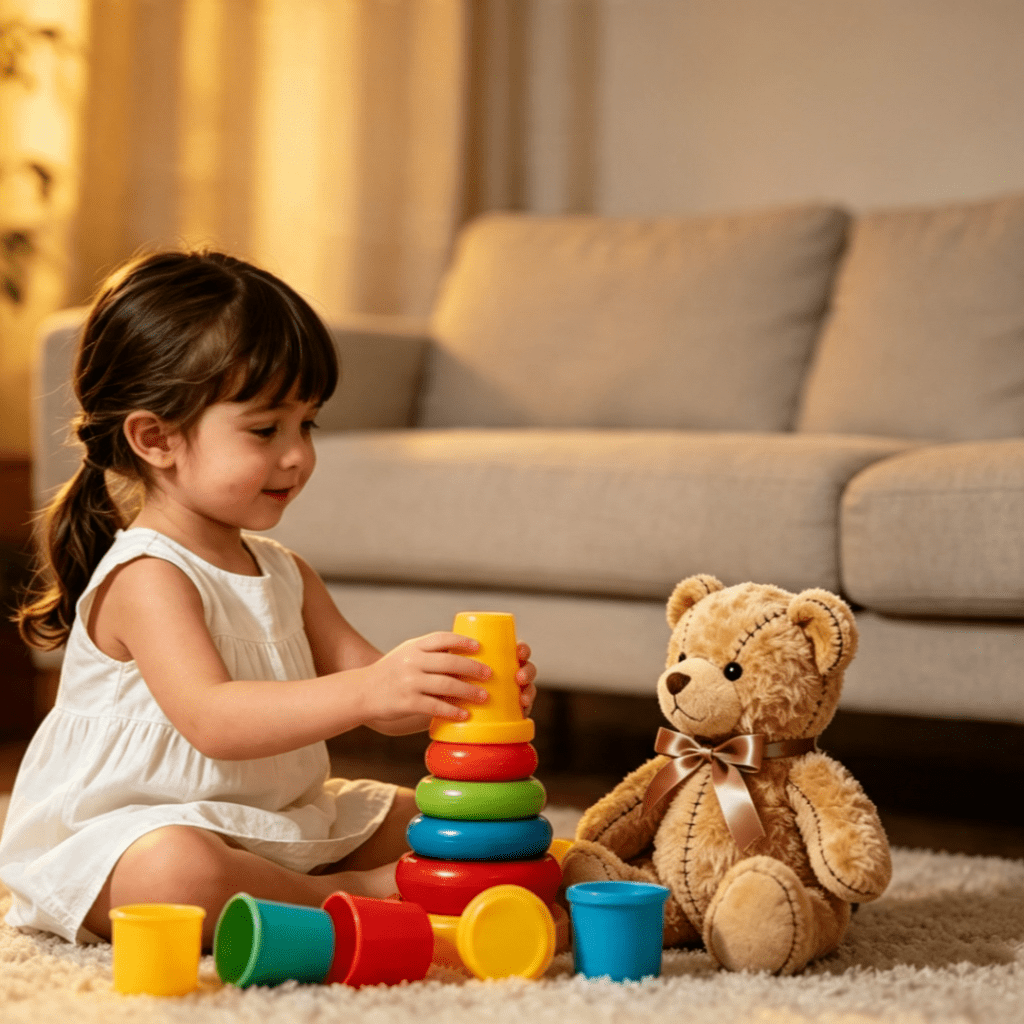
Around the age of four, Theory of Mind develops, causing a child to realize that there are perspectives other than his own. The child now knows that Mom and Dad are not aware of everything that he thinks and feels. Therefore, the child realizes that he has to tell Mom and Dad what is going on inside his mind. This causes the child to realize a need to communicate with others. As a result, communication begins to improve drastically, becoming much more complex.

Theory of Mind is also the basis for being able to express empathy. By recognizing that another person has a different mental state and emotional make-up, the child is now able to notice and pay attention to the emotions of others. This can allow the child to adjust what he says and does to offer comfort or solidarity. Through doing so, the child builds and strengthens relationships.
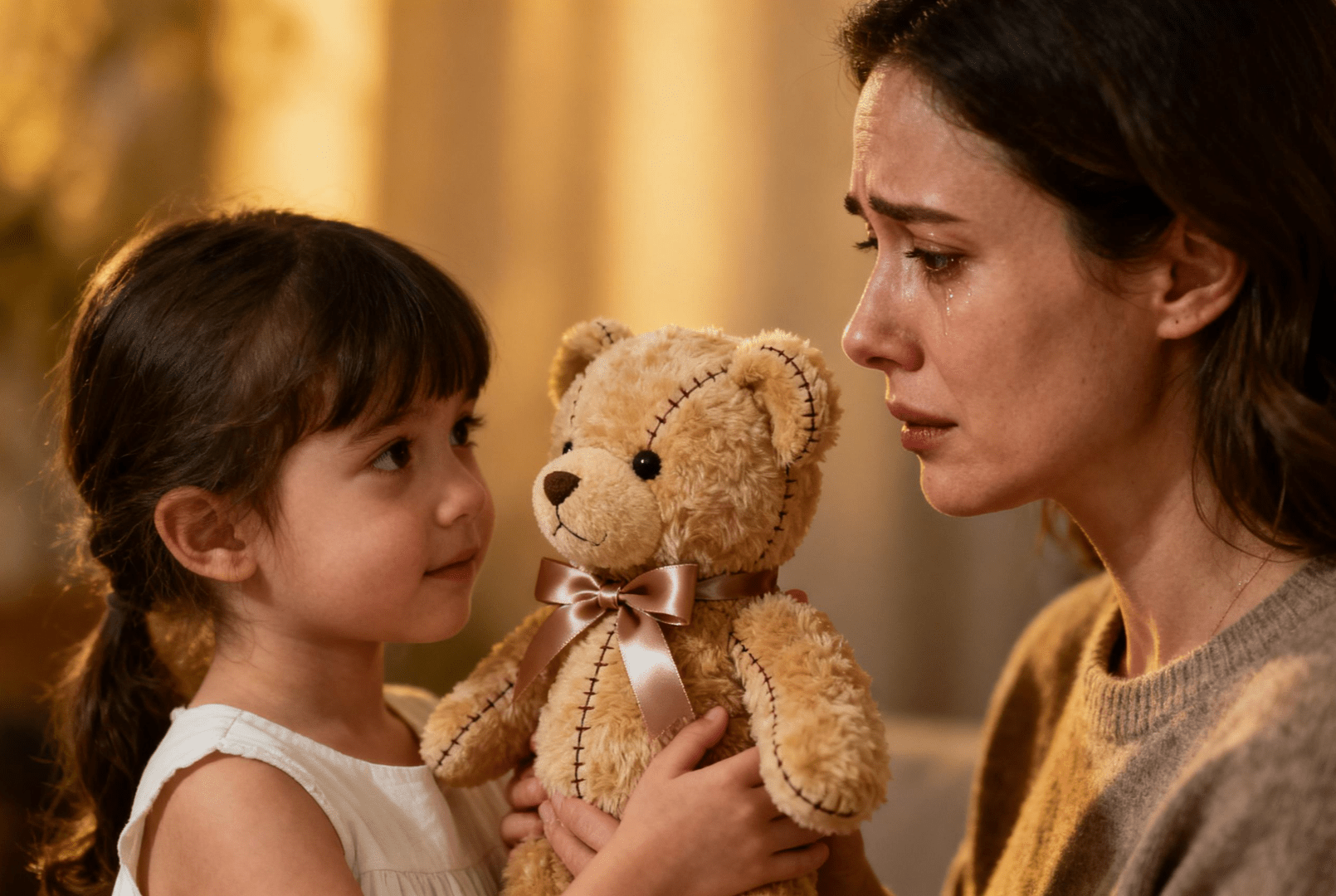

Theory of Mind is also the basis for honesty and lies. Once Theory of Mind develops, a child understands that what a person thinks may not be real. They also understand that Mom and Dad do not know what happened if they are not present when it happens. Therefore, a child has to decide whether to report what actually happened or deliberately distort his reporting of reality.
Individuals on the autism spectrum have different levels of Theory of Mind since most autistic individuals begin regressing around the age of two, long before Theory of Mind begins to develop. In many cases, Theory of Mind never develops, making it impossible to be aware that others have a separate set of thoughts and feelings. This can make communicating, empathy, and deliberately distorting the truth impossible for these children.
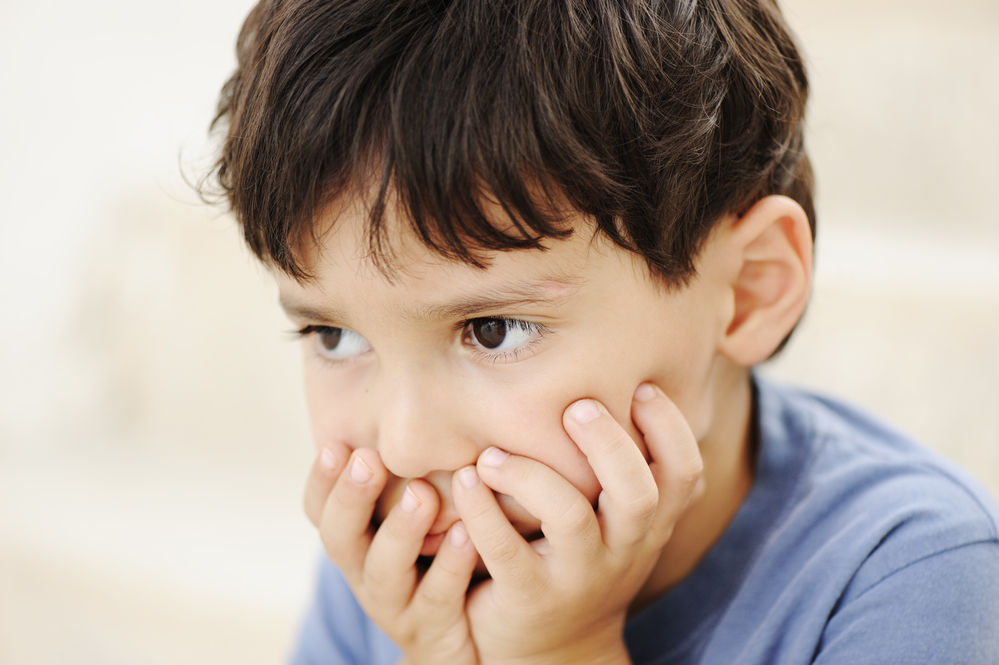
Fortunately, some children on the autism spectrum do develop some aspects of Theory of Mind. In these cases, the child may be able to understand that others have different beliefs, thoughts, and feelings. As a result, he might have the desire to communicate and attempt to do so. He may also have a desire to be empathetic. However, the social cues read by neurotypical individuals may be missed by this child. Therefore, he might recognize the different mental states of others but be unable to determine the appropriate expression of empathy. This individual can be helped to show empathy appropriately if you tell him what to do when he sees certain social cues.

Next:

Eating Tips For Children With Autism
Success With Sleep Issues Associated With Autism
More Topics:
Optimum Health’s Concept of Healing
Primary Wellness Consultations
Natural Healthcare Center Location
Donations: Help Us Help Others
Email Us: How Can We Assist You?

Start your path to optimum health by scheduling your appointment today. Member: Certified Natural Health Professionals